Thursday, May 22, 2014

Forgiveness and self-love

Acivity is the enemy of reflection.  Don’t get me wrong too much reflection and we can become morose and even depressed.  But too much activity and we can gloss over or repress our feelings and emotions.  It is, like most things in life, a balancing act.

Forgiveness is an especially tough one.  The need to forgive can be masked by so many other emotions like guilt and even anger.  We need some real time to reflect in order to discern what we need to forgive ourselves for.  For me a big one was to forgive myself for being such a lousy mother for so many years. (I still make many, many mistakes i must forgive myself for, in spite of my huge improvement). 

We carry around this guilt or anger or feeling of uneasiness or dissatisfaction.  Something is nagging at us and won’t give us any peace.  Usually when I feel that way I know I have done something “wrong”.  It takes a little bit of soul searching to figure out what it is and then more soul searching to actually forgive myself.   It means that I have to admit I am not perfect and I actually made a mistake. (See my last post). Then I have to tell myself I am human and we all make mistakes.  That is how we learn and grow after all as mistakes are our great teachers.  True forgiveness means I can’t call it up at a later time and chastise myself for this mistake or failing.  Often I find I say I have forgiven myself only to catch myself beating myself up at a later time.   Identify, forgive, learn the lesson and then close the door on the recriminations, guilt, anger, etc.  We want to dispassionately remember the event or mistake so we can call up the lesson but we don’t want to continue to berate ourselves for making the mistake.

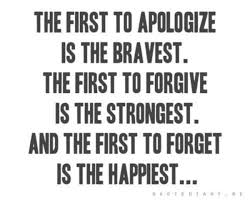
It is so true that until we can learn to forgive ourselves we can’t possibly forgive others.  Is this another aspect of self-love perhaps?  We often confuse forgiveness of others with simply accepting bad treatment from them.  There is a difference.  Forgiveness means we let go of any anger or judgment.  The false forgiveness may simply be a lack of boundaries where we are willing to “forgive and forget” bad treatment or behavior.    Forgiveness is not easy or automatic.   We develop a forgiving heart by forgiving ourselves and then when we have acquired a forgiving heart we can also forgive others.
Wednesday, May 14, 2014

Perfectionism and self-love

So many of us grew up believing we had to be “perfect” in order to be loved. We had to earn love. (Have things changed?)  It was not until I became an adult that I realized love is a gift. I still have a hard time believing it.

Being “perfect” meant conforming to the societal norms for a “girl”.   We were polite, considerate, thoughtful, never boastful or ambitious, supportive of others, put the needs of others ahead of our needs, patient, humble and much more.  We were supposed to blend in.  We never wanted to call attention to ourselves. (This is one reason we struggled in the work world).  We would berate ourselves mercilessly if we failed in any small way in our pursuit of perfection and love.  We would harshly judge and certainly avoid other “girls” who failed or chose a different path. We looked for “perfection” in others as well but we were hardest on ourselves.

It is impossible to accept who we are if we are always falling short of this “perfect female”. (We are even afraid to admit we have any faults or shortcomings or even make mistakes and so we are dishonest with ourselves and others.)


Doesn’t genuine love happen, not when we glorify or idealize another person, but when we love them with all their shortcomings, foibles and faults?  We don’t really love another person if we love the image or fantasy we have created of them.  The same can be true of us. Perhaps that is what the “experts” mean when they say you have to love yourself before you can love another. It is only when we accept ourselves for whom we are (and admit we are not perfect) that we can accept others for who they are. We can experience genuine love. It seems self acceptance is one part of self-love.

Monday, April 28, 2014

"Empowerment"?

gas mask business man -
Empowerment photo? Someone posted it as one. 


Everywhere I turn it seems I see the word empowerment. It is tied to food, women, health, and on and on.  It struck me today that I really have only a very vague idea of its meaning. Is there any substance to the concept of “empowerment” or is it just a marketing gimmick.    I looked it up in Webster’s which provides a meaning, “to give power to someone”. So are we giving power to ourselves or is someone else giving it to us?   My vague understanding is that much of the “empowerment” information in terms of women’s issues is about giving power to ourselves or at least not letting others take away our power.


When I use the word “power” I specifically mean we have the power to change our lives by changing our own behavior and attitude in any given situation and at any given period of time in our lives. First we have to recognize what our attitude is and that may be the hardest part. Our attitudes and behaviors are so ingrained in us they can be very, very difficult to recognize.  Once we know, recognize and understand our attitude and/or our behavior we can work to change it. I’m not saying changing it is easy but at least we have a target.


By giving you my thoughts am I “empowering” you to change your life by changing your attitude and behavior?  My curiosity is peaked and I will be looking into the meaning of “empowerment” more in the coming weeks. I will also be exploring self-love more. (I tend to jump around subjects a bit.  I apologize). 

What empowers us?  What does it mean to be empowered? Do we need to be empowered? Who empowers us?  I always seem to have more questions than answers!

Tuesday, April 15, 2014

What is love?


It seems before we can explore the idea of "self-love" we need to explore the concept of love in general. That makes sense. 


Is love an art just like living is an art?  If it is an art it requires knowledge and effort.  Or is love just a pleasant sensation? 

According to Erich Fromm in his book, "The Art of Loving”, love is an art which requires mastery of the theory and mastery of the practice just like any art such as music, medicine, etc.

Today is short and sweet but something that needs some serious pondering?  How do you see "love"? Do you treat it as an art or as a pleasant sensation?


Tuesday, April 1, 2014

Back to self-love

I just remembered that a few weeks ago I said I was going to explore the concept of "self-love" that we hear so much about.  Some suggest that it is the foundation for a meaningful and happy life.  So what exactly is it?  Do I have it?  If I don't have it how do I cultivate it?  Do I really care if I "have" it?  As usual there seem to be more questions that answers but we have to start someone on this journey.

Here is what wikipedia says about self-love.

Self-love is the love of oneself.

In 1956 psychologist and social philosopher Erich Fromm proposed that loving oneself is different from being arrogant, conceited or egocentric.  He proposed that loving oneself means caring about oneself, taking responsibility for oneself, respecting oneself, and knowing oneself(e.g. being realistic and honest about one's strengths and weaknesses). He proposed, further, that in order to be able to truly love another person, a person needs first to love oneself in this way.


Well this is as good a place as any to start on my "quest".  I'm going to contemplate the definition and look into Erich Fromm's (seen below)  background a little bit.


Tuesday, March 18, 2014

The Funny Bone - Really!

There are so many serious and sad events in the news . For some reason as I felt myself getting sad over these recent events I started to think about some of the funny people in my life.  

My Aunt and my Grandfather, both passed away many years ago, were very funny people.  I get a warm feeling whenever I think of them. I think people with a sense of humor are remembered in a special way.  


My son-in-law has great funny one-liners.  We recently had a conversation about a mutual friend.  I am worried about her recent choice in men and said so to my son-in-law.  ”But I think she is just lonely right now and wants some companionship” I said to him.  “Oh he is just a “placeholder” my son-in-law replied.  I chuckled then and I still chuckle whenever I think of his comment.  It takes some of the sting out of the worry.  Humor really does “lighten the load”.

I am not funny at all –ever.   When I was young, even as a child, I think I felt like life was very serious and my mood reflected that. I’m definitely more light hearted than I was when I was younger. But I still can never think of anything funny to say.  I never tell a joke because I am like Nemo’s father in “Finding Nemo”.  I just sound stupid.  I guess my funny bone is  missing! 


Maybe I can borrow his!
   
I envy people who can make others laugh. I guess humor is, like a lot of things in life, a gift.  I’ll keep hoping my sense of humor will develop because funny people do create happiness in so many small and big ways. Thanks to all those who have a sense of humor.  Keep making the rest of us laugh!


Thursday, March 6, 2014

The "common good"? Does it exist?

As I listen to the politicians criticize and berate the opposing political party over the situation in Ukraine I am confronted again with the sad state of our national politics.

Photo: Colorado River flowing through canyon walls

Our culture seems to be obsessed with the blame game. Immediately after an event happens the focus shifts to who or what to blame for the crisis rather than how to help or even heal.  Perhaps divisive comments and blame make “good” news and thus become the focus of the media.   But even if that is the principal reason for the blame game we should pause to consider that such a penchant can create damage to our national psyche and culture. It trickles down to business, communities and even families.

Sometimes determining responsibility is a good thing if it will lead to preventative measures or even if there should be some consequence. But should it be the principal focus?

Can we reframe our psyche to see a problem that we all must work together to solve? There is a "common good" – something we all value that we all share and which we want to promote or protect.   If we can’t seem to find that maybe we should do some national or personal soul searching to find it. Let’s rally around our "common good" putting aside our differences so we can work together for the "common good".  And let’s recognize and promote those who do rather than those who don’t. We will feel much better about ourselves and our nation if we are engaged in a positive, productive ventures rather than tearing each other down.